
Why Sexual Wellbeing Education Matters for Christians
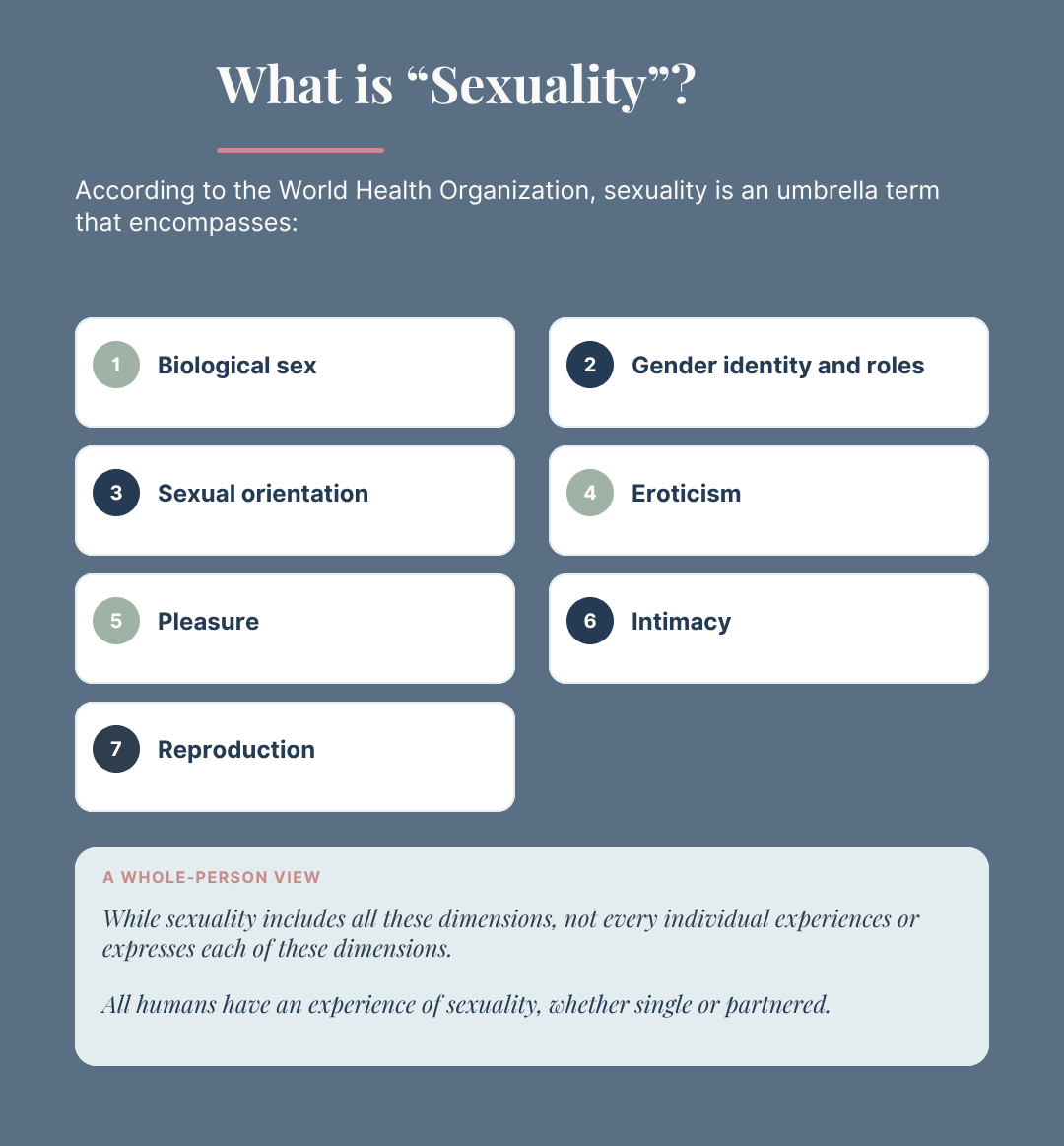
Sexuality is part of being human
Sexuality is a central part of the human experience throughout life. It is expansive, encompassing our bodies, identities, desires, beliefs, values, relationships, pleasure and intimacy, and is shaped by biological, psychological, social, cultural and spiritual influences. (1)
Read the full definition
Sexuality, relationships and faith are deeply interconnected. Research helps us understand both the ways Christian faith can support sexual wellbeing and the challenges that can arise when people have limited access to comprehensive, evidence-informed sexuality education.
What do we mean by Sexual Wellbeing?
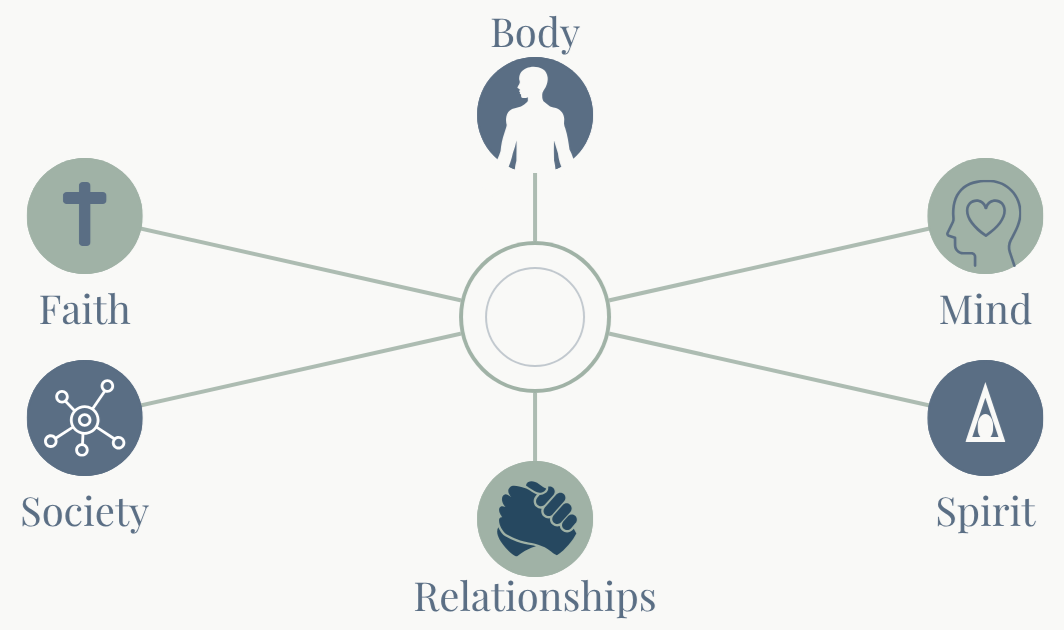
Sexual wellbeing is the holistic biopsychosocial and spiritual experience of sexuality that encompasses health, pleasure, active consent, safety, dignity, positive relationships with self and others, personal responsibility, and alignment with one’s values and faith. (3, 4)
Sexual wellbeing is not synonymous with being sexually active, engaging frequently in sexual activity, or experiencing no sexual difficulties. Rather, it reflects a sense of confidence, contentment and health in one’s experience and expression of sexuality. Sexual wellbeing is relevant to every individual, whether single, dating, or married. (2, 5, 6)
For SACRED Intimacy, sexual wellbeing also includes the spiritual experience of sexuality. Our sexuality exists alongside our faith, values and conscience, and can be thoughtfully integrated with our understanding of God, ourselves, our bodies and our relationships. (7, 8) The S.A.C.R.E.D. Intimacy Guide offers a practical, faith-centred framework to nourish and support sexual wellbeing.
To read more about the supporting theories and frameworks that inform this understanding of sexual wellbeing, click here.
Faith Can Promote Sexual Wellbeing
Faith can be a powerful resource for sexual wellbeing, when grounded in a sexuality-positive, grace-centred theology. Seeing sexual activity through a sacred lens can improve a couple’s commitment, emotional closeness, willingness to forgive, and problem solving. (7)

Faith as personally meaningful
When faith is internalised through personal conviction ("Identified Faith"), is self-congruent, and experienced through a sacred lens: faith can support sexual, relational and psychological wellbeing. (9, 10)
Read more
A supportive relationship with God
Positive religious coping describes a secure, supportive and comforting relationship with God that can provide a source of support for processing life stressors, challenges and forgiveness. (10)
Read more
Seeing sexuality as sacred
Viewing sexuality, the body and the capacity for desire as sacred can support the integration of faith and sexuality, including positive sexual body self-esteem and overall mental wellbeing. (11)
Read more
What does this research tell us?
These studies demonstrate that identified faith and positive religious coping are key ingredients in the experience of sexual wellbeing for Christians.
Read more
Challenges for Christian Sexual Wellbeing
While there is positive, the relationship between faith and sexuality is complex. Individuals raised within Evangelical and conservative Christian subcultures tend to lack in comprehensive or accurate sex education, and are negatively impacted by the Evangelical Purity Movement (EPM). (12) The EPM, otherwise known as “purity culture” is defined by its strict abstinence-only-until-marriage messaging, rigid gender roles and sexual double standards, female sexual gatekeepers, contamination metaphors, idealisation of the sexual prosperity gospel, framing sex as marital duty, and shame based messaging to deter premarital sexual activity. (12) Exposure to purity culture messaging and limited sexuality education is associated with poorer sexual health outcomes. (9, 12-14)
Christian women experience sexual dysfunction such as vaginismus, sexual dissatisfaction and shame, at higher levels than non-religious populations especially when exposed to “obligation sex” scripts. (15, 16) Christian men also self-report more pornography or sex “addiction” in comparison to non-religious men, due to the conflict between sexual behaviours and their religious values. This reflects psychological distress rather than objective rates of clinical sexual disorder. (17) Christian women are also more susceptible to mislabelling marital rape, not being able to accurately determine sexual assault, and even endorsing rape myths. (18, 19) Consequently, Christian individuals and couples can suffer in silence with sexual distress, compounded by a culture of silence and shame around sexuality. (14, 15)

Abstinence Only Sexual Education
Purity culture centres sexual education on abstinence until marriage, often without comprehensive education about contraception, STI prevention and safer sex. While these messages may delay sexual activity, research suggests they do not necessarily prevent premarital sex and can leave individuals less prepared to protect their sexual and reproductive health.
Read more
Gender & Sexual Scripts
Purity culture can reinforce rigid gendered sexual scripts in which men are portrayed as naturally hypersexual and women as responsible for regulating male sexuality. These messages can place unequal responsibility on women while limiting men’s agency, emotional vulnerability and understanding of their own sexuality.
Read more
Shame, Guilt & the Body
Purity culture can use fear, shame and contamination metaphors to discourage premarital sexual activity, communicating that sexual behaviour can diminish a person's worth or purity. These messages can persist beyond marriage and have been associated with sexual guilt, anxiety, shame and sexual pain.
Read more
Consent, Agency & Obligation
Purity culture messages that frame sex as a marital duty can undermine sexual agency and active consent. Obligation-based sexual scripts have been associated with sexual pain and relational distress, while endorsement of purity-culture beliefs has also been associated with greater rape-myth acceptance and difficulty recognising marital or acquaintance rape.
Read more
Sexual Function, Pleasure & Communication
Limited sexual education, sexual shame and rigid sexual scripts can affect sexual function, pleasure and communication. Research identifies associations with sexual pain, difficulty communicating about sex, a wider orgasm gap, and distress about sexual behaviours that conflict with religious values.
Read more
Sexual Diversity & Belonging
Purity culture typically focuses on heterosexual experiences and can ignore, erase or condemn same-sex attraction. For same-sex attracted Christians, these messages can contribute to ostracisation and significant psychological distress.
Read more
Why is Holistic Sexuality Education Important?
Good sexuality education equips people with accurate knowledge and practical skills so they can make informed, responsible decisions about their sexuality, health and relationships. Providing accurate information about sexuality does not determine the sexual decisions a person will make. Rather, education can provide the knowledge and skills needed to make thoughtful, informed decisions within their own faith, values and conscience.
Comprehensive Sexuality Education is associated with:
- Delaying the age of sexual debut
- Reducing overall risk-taking behaviour
- Reducing the total number of sexual partners
- Increased consistent condom use (among sexually active youth)
- Increased contraceptive (among sexually active youth)
- Lower rates of unintended pregnancy
- Lower rates of STIs
- Preventing intimate partner violence
- Encourages personal agency
- Improves mutual sexual pleasure (12, 24, 25)
This is in stark contrast to the poor negative outcomes of no sexuality education or abstinence-only sexuality education which fails to prevent premarital sex, is often medically inaccurate or distorted, increases risk for STIs, increases the rates of unintended pregnancy, and has a negative impact on sexual wellbeing.

Curious about our sources?
View references
- World Health Organization. Sexual health [Internet]. 2026 [cited 2026]. Available from: https://www.who.int/health-topics/sexual-health
- McCarthy B, Ross LW, Metz M. The good enough sex model. In: New directions in sex therapy: innovations and alternatives. 2024.
- The Harvey Institute. Six principles of sexual health [Internet]. Available from: https://www.theharveyinstitute.com/six-principles-of-sexual-health
- Ford JV, Corona Vargas E, Finotelli I Jr, Fortenberry JD, Kismödi E, Philpott A, et al. Why pleasure matters: its global relevance for sexual health, sexual rights and wellbeing. Int J Sex Health. 2019;31(3):217-30.
- Mitchell KR, Lewis R, O'Sullivan LF, Fortenberry JD. What is sexual wellbeing and why does it matter for public health? Lancet Public Health. 2021;6(8):e608-13.
- Kleinplatz PJ, Ménard AD, Paquet MP, Paradis N, Campbell M, Zuccarino D, et al. The components of optimal sexuality: a portrait of “great sex”. Can J Hum Sex. 2009;18(1-2):1-13.
- Banjoko SA. What’s faith got to do with it? Christian sexual scripts and the transition to marriage. 2021.
- Stayton WR. Advancing sexual health for Christian clients: data and dogma, by Rev. Dr. Beverly Dale and Rachel Keller, LCSW-C, CST. New York: Routledge; 2019. 234 p.
- Pugh MJ. Evaluating US purity culture’s impact on female sexual health and development. 2025.
- Johnston-York JM. Sexual satisfaction among newlywed conservative Christians: the role of sexual anxiety, sexual assertiveness, sexual communication, and religious coping. 2019.
- Claney C. Sexual without sex: holistic sexual health and well-being for single emerging adult Christian women. Biola University; 2018.
- Estrada LL. Clinical considerations of the evangelical purity movement’s impact on female sexuality. J Sex Marital Ther. 2022;48(2):121-32.
- Sawatsky J, Mize L, Gregoire K, Hodges AL, Lindenbach R, Gregoire SW. The etiology of sexual pain in American Christian women: associations of sexual debut, maternal teachings on sex, and abuse history with pain severity. J Sex Med. 2026;23(3):qdag020.
- Leonard Hodges A, LaBelle S. Teaching God’s design: exploring the rhetorical and relational goals of evangelical leaders during premarital education about sex. Commun Educ. 2024;73(1):64-83.
- Azim KA, Happel-Parkins A, Moses A. Epistles of dyspareunia: storying Christian women’s experiences of painful sex. Cult Health Sex. 2021;23(5):644-58.
- Sawatsky J, Lindenbach R, Gregoire SW, Gregoire K. Sanctified sexism: effects of purity culture tropes on White Christian women’s marital and sexual satisfaction and experience of sexual pain. Sociol Relig. 2025;86(4):519-43.
- Lau TC, Miles GM. “I think it’s biblically wrong, but temptation gets the better of me”: a survey on out-of-control sexual behavior in a Christian cohort of men in the UK. Dignity. 2023;8(1):7.
- Owens BC, Hall MEL, Anderson TL. The relationship between purity culture and rape myth acceptance. J Psychol Theol. 2021;49(4):405-18.
- Wolfe R. Your body is not your own: (dis)embodied sexual and mental health in evangelical purity culture. University of California, San Francisco; 2024.
- Cronan K. An analysis of evangelical purity culture and gender-based beliefs. Regent University; 2023.
- Stevenson R, Hiebert D. Silenced desire: personal effects of the evangelical construction of female sexuality. J Sociol Christ. 2021;11(2):59-83.
- Sessions EM. Can the Bible close the orgasm gap? How Song of Songs 7:1-6 handles anatomy and sexuality, and how that’s good news for women. St Mark's Rev. 2020;(251):75-88.
- Killian T, Fredrick EG, Merenda F II. From desecration to disconnection: connecting negative religious beliefs about sexual minorities to social quality of life. Pastor Psychol. 2025;74(4):521-35.
- UNESCO. Facing the facts: the case for comprehensive sexuality education. Paris: UNESCO; 2019.
- Bomester O. Exploring intrinsic religiosity as a means to militate against risky sexual behaviour in adolescents from Christian faith-based schools. 2021.